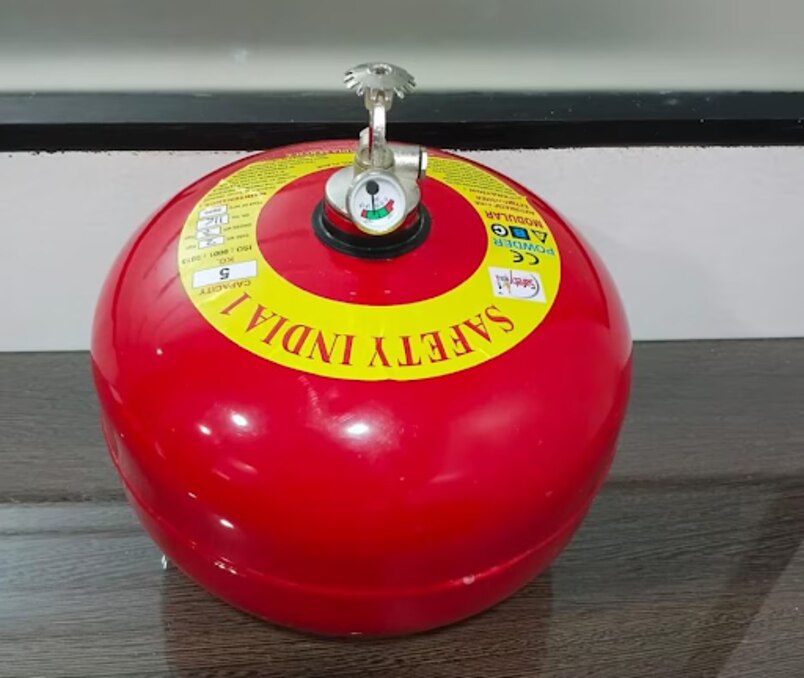
A modular fire extinguisher is not one standard technology: its agent, heat-release device, discharge pattern, and approval determine where it belongs. By the end, you will be able to trace its operating sequence, match the agent to the fire class, identify suitable hazards, and request the design data needed for a safe selection.
Key takeaways
- Heat activates the release; smoke alone does not open the extinguisher.
- Check the rated activation temperature before choosing an installation location.
- Match the agent to the fire class and energised equipment risk.
- After discharge, isolate the area and arrange inspection, recharge, or replacement.
How a modular extinguisher detects heat and releases the agent
A modular fire extinguisher working principle begins with heat reaching a heat-sensitive release, not smoke entering a detector. The unit remains sealed while the surrounding temperature stays below its rated activation point. Once that point is reached, the release mechanism breaks, melts, or sends an electrical signal to open the discharge path.
Common release devices include:
- A frangible bulb: liquid inside expands as temperature rises, shattering the bulb at its rated temperature.
- A fusible link: a metal element melts, allowing a spring-loaded valve or restraint to release.
- A thermocouple or electronic sensor: it detects a temperature threshold or rapid rise and activates an electrical actuator.
A fixed-temperature device operates at a set point; common ratings include approximately 57°C, 68°C, 79°C, and 93°C. A rate-of-rise detector responds to an unusually rapid temperature increase, even before a fixed ambient temperature is reached. Do not select either type from normal room temperature alone.
After activation, a pressurized vessel or cartridge forces the extinguishing agent through an opened valve, or a gas-generating device pressurizes the agent. The material then exits through an orifice or diffuser, forming the designed spray, powder cloud, or gas discharge around the hazard.
A thermal-only unit responds to heat or flame development, not smoke, and usually gives no alarm-stage warning. It can suppress an unattended fire quickly, but discharge may occur before occupants isolate machinery or evacuate.
Activation temperature, release type, and discharge limits
A 57°C thermal release is not automatically suitable for a room held near 30°C. Select the activation temperature from the unit’s listing, then compare it with normal ceiling, machinery, process, and ambient temperatures.
Common ratings include approximately 57°C, 68°C, 79°C, and 93°C; choosing too low a rating can cause unwanted discharge, while choosing too high a rating delays suppression.
Detection method changes the warning and control available:
| Detection method | Response | Selection consequence |
|---|---|---|
| Fixed-temperature device | Operates when its rated temperature is reached | Suits predictable heat exposure but can discharge without smoke or alarm-stage warning |
| Rate-of-rise detector | Responds to a rapid temperature increase | Suits developing fires with a sharp heat rise, but needs listing confirmation for the hazard |
A heat-triggered unit acts quickly without waiting for an operator, yet a localized hot surface can activate it before occupants isolate machinery or evacuate. Occupied areas may therefore need separate alarm, shutdown, detection, or manual-release and abort arrangements.
Check the listed discharge duration rather than assuming that a larger cylinder protects for longer. The approval should state the maximum protected room volume or equipment dimensions, mounting orientation, operating-temperature range, agent, electrical compatibility, and discharge duration. Obstructions, open doors, ventilation, and enclosure leakage can invalidate a design based only on room size.
After discharge, treat the module as spent until the manufacturer replaces or factory-recharges it and inspects the release and discharge path.
Match the extinguishing agent to the fire class and equipment
An agent is compatible only when its listing covers the fuel, equipment, and discharge environment. The labels Class A, Class B, Class C, Class D and Class K fires do not make extinguishers interchangeable.
| Agent | Compatible hazard | Why the choice matters |
|---|---|---|
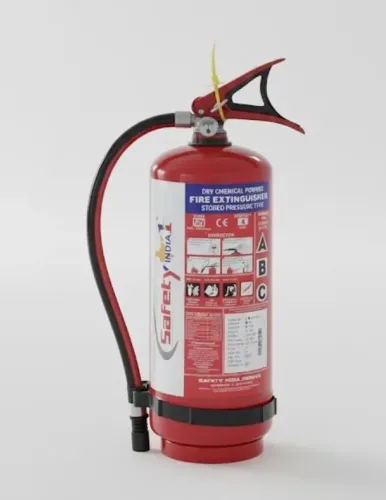
| Dry chemical powder | Class B and Class C; some listed units also cover Class A | Knocks down flames quickly, but leaves residue and may not cool deep seated Class A material. Re ignition can follow. |
| Clean agent | Enclosed electrical and electronic equipment | Leaves little residue, but needs a validated concentration and enclosure performance. It is not a universal substitute for cooling. |
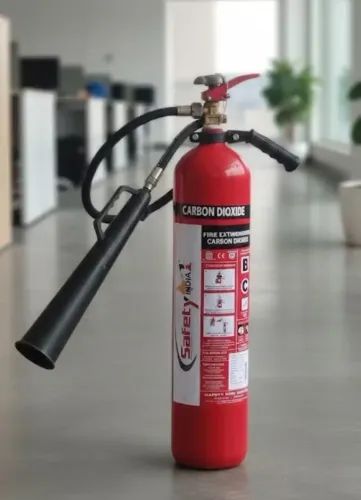
| CO₂ extinguisher | Energised electrical equipment and some Class B liquids | Leaves no solid residue, but provides limited cooling and creates an asphyxiation hazard in occupied spaces. |
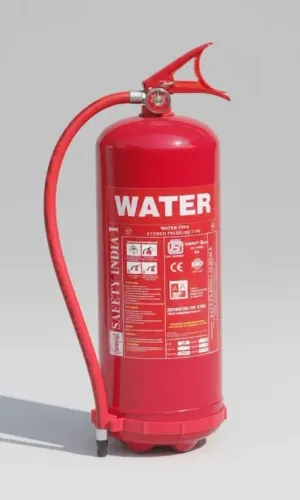
| Water mist | Listed Class A hazards and selected electrical or liquid risks | Cools effectively, but an unlisted unit can spread burning liquid or create an electrical shock hazard. |
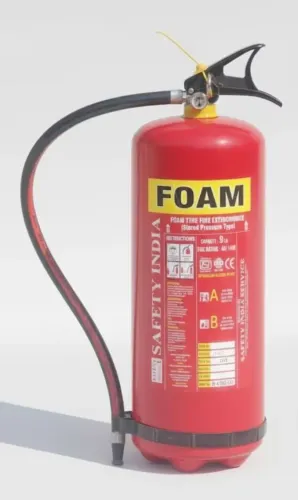
| Foam | Class A and Class B liquids | Forms a blanket over liquid fuel, but is unsuitable for energised electrical equipment and many gas fires. |
| Class D powder | A specifically tested combustible metal | Magnesium, sodium, titanium and other metals need different powders. Ordinary ABC powder is not adequate. |
| Class K wet chemical | Commercial cooking oils and fats | Reacts with hot oil to form a stable soap layer; water or ordinary foam can cause violent splashing. |
Check the complete approval for fire classes, protected dimensions, electrical conditions, and occupied space use. A modular unit is suitable only when those limits match the enclosure or equipment geometry.
Where modular extinguishers fit—and where their design limits matter
Use a modular unit for a small, defined hazard where heat can reach the detector and the discharge pattern covers the target. It suits normally unattended equipment better than a large occupied area.
| Location | Why it fits | Design limit |
|---|---|---|
| Electrical panel or control cabinet | Local electrical panel fire protection without flooding the room | Confirm agent compatibility, enclosure volume, and tested nozzle position |
| Generator room or engine compartment | Early response around fuel, oil, and machinery | Obstructions, ventilation, and hot surfaces must match the listing |
| CNC or machine enclosure | Defined geometry supports local application | Extra units or altered spacing do not automatically extend coverage |
| Small server room | Useful for server room fire protection when the clean agent listing covers total flooding | Calculate volume, leakage, temperature, doors, dampers, and ventilation |
| Commercial kitchen equipment | Can support kitchen fire safety at a listed local hazard | Cooking-oil fires require an agent and approval intended for Class K hazards |
A local-application unit protects a machine, cabinet, hood, or compartment; a total-flooding unit protects an enclosed volume. Room floor area alone cannot size clean-agent protection, because concentration depends on volume, temperature, leakage, and fire class.
Do not treat ceiling-mounted modules as substitutes for sprinklers, hydrants, or a fire-alarm system in warehouses, high-rack storage, changing processes, or large buildings. Occupied rooms also need alarm, shutdown, evacuation, and, where required, manual release or abort controls because automatic discharge can occur before occupants isolate equipment.
What to verify before installation, and what happens after discharge
Before paying for a unit, obtain its complete listing or approval, not just the agent name and cylinder capacity. Safety India Service 27CNOPP6823R1ZV can be asked for this documentation when comparing a modular unit with other fixed protection.
Request confirmation of:
- Protected fire classes, protected floor area, protected volume, or maximum equipment dimensions
- Activation temperature, release device type, discharge duration, and operating-temperature range
- Mounting orientation, mounting height and spacing, discharge pattern, and required clearances
- Electrical compatibility, including voltage, shutdown interfaces, alarm connections, and manual release or abort requirements
- Approval for occupied-space use, plus controls for ventilation, dampers, doors, and machinery
- Inspection frequency, maintenance interval, replacement parts, and the procedure after a discharge
- Agent residue, cleanup method, re-entry conditions, and any equipment that the agent can damage
Choose the layout evidence that matches the hazard.
| Coverage basis | What the documents must show | What goes wrong if ignored |
|---|---|---|
| Local application | Tested distance, orientation, spacing, and hazard geometry | Extra units do not correct an untested discharge pattern |
| Total flooding | Protected volume, design concentration, temperature, leakage, and enclosure integrity | Floor area alone produces an under-sized clean-agent system |
After discharge, treat the device as a single-use fire extinguisher, even if its vessel appears intact. Arrange factory recharge or replacement, inspect the thermal release and discharge path, and confirm that the hazard has not changed.
Remove residue using the agent manufacturer’s method; dry chemical can contaminate electronics, while water or foam can create electrical and corrosion hazards.
Related product
 | Modular Fire Extinguisher Safety India Service brings you high-performance Modular Fire Extinguishers designed for automatic protection in high-risk areas. View product → |
Frequently asked questions
How does a modular fire extinguisher detect and respond to heat?
A heat-sensitive release remains sealed below its rated activation point. Heat then breaks, melts, or electrically triggers the release and opens the discharge path.
What should you check about activation temperature and discharge?
Confirm the rated activation temperature, release type, discharge direction, protected volume, and the manufacturer’s discharge limits before installation.
How do you choose the extinguishing agent for a modular unit?
Match the agent to the fire class, fuel, enclosure, and equipment. Check compatibility with energised electrical equipment before selecting an installation.
What happens after a modular extinguisher discharges?
Treat the unit as discharged, isolate the hazard, ventilate when safe, inspect the protected area, and arrange authorised recharge or replacement before restoring coverage.