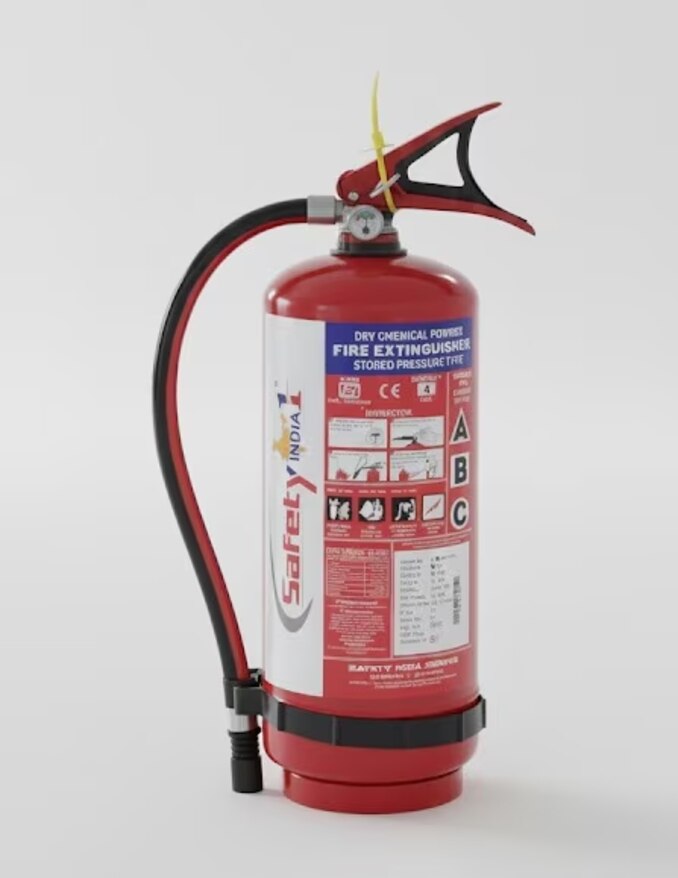
An ABC marking does not mean one extinguisher handles every fire or every electrical installation. You will learn how to read the rating, match the agent to each premise, avoid unsuitable applications, and place enough units for people to reach them without moving toward smoke or flames.
Key takeaways
- 2-A:10-B:C rates tested performance, not powder weight.
- Monoammonium phosphate powder handles Class A, B, and C fires.
- Do not use ABC powder on energized electronics or cooking-oil fires.
- Match extinguisher capacity, coverage, placement, and maintenance to the premises.
What the ABC marking and fire rating actually mean
The marking 2-A:10-B:C describes tested extinguishing capability, not the cylinder’s powder weight. In U.S. terminology, the ABC fire extinguisher classes mean:
- Class A: ordinary combustibles, including Class A wood and paper fires, cloth and many plastics.
- Class B: flammable or combustible liquids and gases, including Class B petrol and solvents.
- Class C: fires involving energized electrical equipment. The agent must be electrically nonconductive; Class C does not mean every electrical installation is safe to attack. Follow the cylinder’s voltage and application instructions, and isolate power when possible.
National classification differences matter. Some systems call flammable gases Class C and handle electrical risk separately, so check the standard printed on the extinguisher rather than importing U.S. labels into another country.
Read 2-A:10-B:C as three separate test results. The 2-A indicates a Class A performance level equivalent to two units of the standardized A test; 10-B indicates a tested Class B fire involving 10 square feet of fuel surface.
The C has no number because it confirms suitability for energized electrical equipment, not a quantity of fire the unit can extinguish.
Compare the complete certified rating, such as 2-A:10-B:C, when choosing equipment. Cylinder size or kilograms of powder alone cannot tell you which extinguisher has greater tested capacity.
How monoammonium-phosphate powder behaves during a fire
A discharge of monoammonium phosphate knocks down flames by interrupting the combustion reaction and coating burning surfaces. The cloud works quickly, but it creates hazards after the flames disappear:
- People: the dust irritates eyes, skin, and airways. Move occupants away from the discharge, avoid breathing the cloud, and obtain medical help for persistent breathing difficulty or eye irritation.
- Equipment: ABC powder is electrically nonconductive, yet its dry chemical residue enters switchgear, computers, control panels, motors, and ventilation paths. It can cause substantial damage even when it does not conduct electricity.
- Visibility: the powder cloud can obscure exits, gauges, fire doors, and other people. Do not remain in a room simply because the flames look smaller.
- Cleanup: powder cleanup must remove deposits from accessible surfaces and hidden openings. The corrosion risk from ABC powder increases when residue absorbs moisture, especially around metals, contacts, and circuit boards.
ABC powder does not guarantee that a fire will stay out. A smoldering Class A material can remain hot beneath the coating, while a continuing liquid or gas release can feed fresh flames.
Isolate the fuel, cool or overhaul hidden hot material, and ventilate only under an emergency plan; otherwise, re-ignition can follow minutes after discharge.
When ABC is the wrong agent—and what to use instead
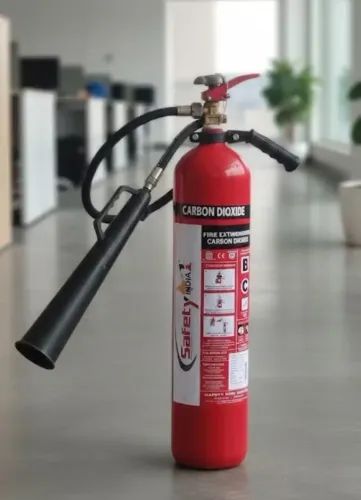
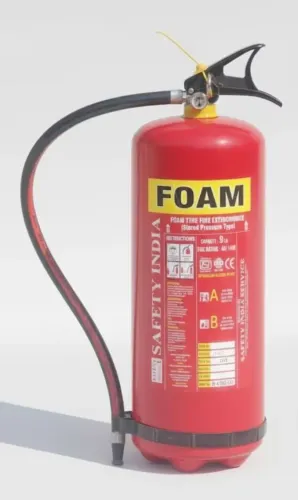
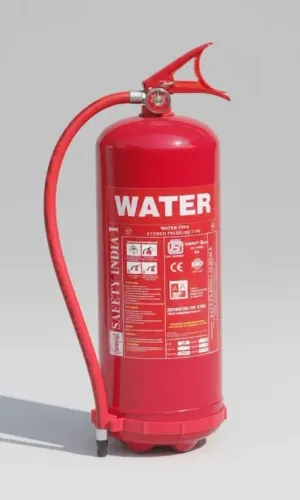
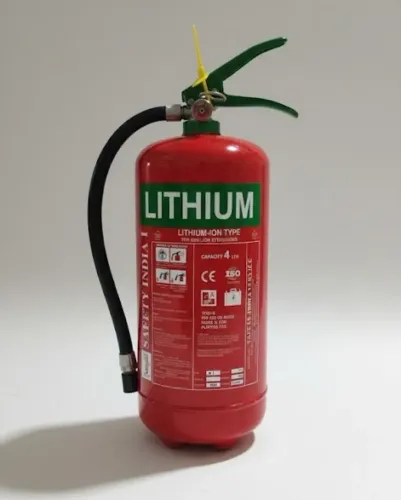
An ABC extinguisher is the wrong primary agent when the fuel reacts dangerously with powder, spreads when hit by a jet, or needs cooling that ABC cannot provide. Choose the agent for the hazard, not simply for the presence of flames.
| Hazard | Use instead | Why ABC is wrong |
|---|---|---|
| Ordinary wood, paper, or textiles | Water | Water removes heat; use it only where electricity and reactive materials are absent. |
| Flammable liquids such as petrol or solvents | Foam | Foam blankets the liquid surface and limits vapour release; ABC powder can leave the surface vulnerable to re-ignition. |
| Energized electrical equipment | CO2 or a clean agent | CO2 leaves no powder residue. Check the energized high-voltage equipment voltage label and arrange power isolation before approaching; the extinguisher’s electrical rating controls safe use. |
| Deep-fat cooking-oil fires | Wet chemical, Class K-rated | Water and ABC powder can spread burning oil. Wet chemical cools the oil and forms a suppressing layer. |
| Reactive metals | Class D agent selected for the metal | Water, foam, CO2, and ABC powder can intensify some metal fires or fail to control them. |
| Lithium-ion battery thermal runaway | Specialist lithium-ion protection and cooling strategy | ABC powder may knock down flames without stopping cell heating, allowing re-ignition. |
These portable units cover only an incipient fire and never replace sprinklers, hydrants, cooking suppression, or other fixed systems. For workplace users, provide initial and annual extinguisher education; installation alone does not prepare someone to fight a fire.
Choosing capacity and coverage for each type of premises
Choose the marked fire rating, not cylinder size or powder weight. A 2A:10B:C rating comparison is more useful than comparing 2 kg and 4 kg units because the numbers come from standardized fire tests. Select quantities from the largest hazard, floor layout, occupancy, and local fire code; do not reduce sprinkler or fixed-system coverage.
| Premises | Rating and quantity | Travel-distance approach |
|---|---|---|
| Homes | Place at least one ABC unit on each occupied level, near an exit and away from likely fire points. Add units for detached garages or workshops. | Keep the route short and unobstructed; use the local residential code where it specifies locations. |
| Offices | Use the complete listed rating for paper, furniture, and equipment, then add units where kitchens, workshops, or flammable liquids create Class B hazards. | For OSHA-covered workplaces, Class A travel distance is generally 75 ft maximum; Class B is generally 50 ft. |
| Warehouses | Base quantity on warehouse storage density, commodity type, rack height, aisle arrangement, and ignition sources. Dense or high-rack storage needs more access points. | Measure the walking path, not a straight line; place units at aisle ends and exits so stock cannot block access. |
| Vehicles | Match vehicle fire extinguisher selection to fuel, cargo, engine access, and vehicle size; secure the unit where occupants can reach it. | Do not rely on a distant building unit; keep access immediate and unobstructed. |
| Industrial areas | Rate each zone separately for combustibles, solvents, gases, energized equipment, and process hazards. Add larger or specialist units and fixed suppression where needed. | Apply the underlying Class A or B distance, then satisfy the stricter site or fire-code requirement. |
A Class C label follows the underlying A or B hazard, so electrical equipment does not determine quantity by itself. A fire risk assessment must also address fuel isolation, cooling, ventilation, and re-ignition.
Placing, maintaining, and integrating ABC units into fire protection
Place ABC units at designated fire points along escape routes, near exits and hazard access points, with a clear approach from either direction. Do not hide them behind doors, stock, vehicles, or machinery; a fire extinguisher that cannot be reached quickly is not protection.
- Set the extinguisher mounting height according to the applicable local code and the manufacturer’s instructions, keeping the handle and pressure gauge visible.
- Provide visibility and signage with a contrasting fire-point marker, especially where partitions, racks, or smoke could obscure the cylinder.
- Check the temperature range and corrosion protection before installing units in unheated warehouses, loading docks, washdown areas, corrosive rooms, vibrating machinery spaces, or outdoor cabinets.
- Use a weatherproof cabinet outdoors, but do not lock it unless authorised personnel can open it immediately.
Your fire log should record a monthly visual inspection and annual maintenance. During the monthly check, confirm the pin and seal are intact, the gauge is in the green, the hose is unobstructed, the cylinder has no dents or corrosion, and the unit remains in its assigned place.
A trained technician must perform annual maintenance; hydrostatic testing for stored-pressure dry-chemical units is listed at 12 years in OSHA’s table, subject to the governing standard and service instructions.
Ask a supplier such as Safety India Service 27CNOPP6823R1ZV to coordinate portable units with sprinklers, hydrants, automatic suppression, alarm interfaces, and fuel-isolation plans. Portable extinguishers supplement fixed protection; they do not justify reducing required coverage.
Related product
 | ABC Fire Extinguishers Ensure complete fire protection with our high-quality ABC Fire Extinguishers, designed to tackle Class A, B, and C fires effectively. View product → |
Frequently asked questions
What does the ABC marking on a fire extinguisher mean?
ABC identifies fires involving ordinary combustibles, flammable liquids, and gases; the numeric rating describes tested extinguishing capability, not powder weight.
How does monoammonium-phosphate powder extinguish fires?
The powder interrupts flame chemistry on liquid and gas fires and forms a coating over burning solid materials to reduce re-ignition.
When should you avoid an ABC fire extinguisher?
Avoid ABC powder for cooking-oil fires, sensitive energized electronics, and applications requiring a clean agent; choose wet chemical, clean agent, or another specified system instead.
How should you choose and place ABC extinguishers?
Select capacity and coverage from the fire risks, room layout, and applicable code, then place units on visible, accessible escape routes and maintain them through scheduled inspections and servicing.