A lithium-ion battery can keep generating heat after visible flames disappear, allowing a damaged cell to reignite or spread failure through a pack. By the end, you will know how to judge the incident, choose evidence-backed equipment, and decide when evacuation and emergency services matter more than a portable extinguisher.
Key takeaways
- Treat visible flame knockdown as incomplete when thermal runaway can continue.
- Check battery type, pack design, and failure mode before selecting an extinguisher.
- Demand test evidence covering battery fires, re-ignition, and the proposed discharge method.
- Plan detection, extinguisher access, isolation, monitoring, and post-fire recovery together.
Why a Lithium-ion Battery Fire Behaves Differently
A lithium-ion battery incident can remain dangerous after the visible flame disappears. Thermal runaway heats a cell until it vents, burns, or fails violently; the heat can trigger cell-to-cell propagation through the pack. That internal reaction creates battery re-ignition risk, so judging an extinguisher only by flame knockdown is inadequate.
| Fire type | What drives the fire | Key difference from a lithium-ion incident |
|---|---|---|
| Ordinary electrical | Energized wiring or equipment | Isolate the power source, then control the fire; the equipment does not usually generate its own continuing heat reaction. |
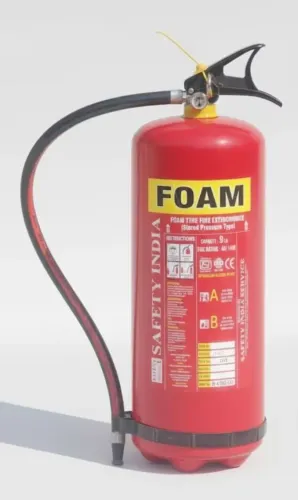
| Class A | Paper, wood, textiles, and other ordinary solids | Cooling and soaking the burning material addresses the fuel; a battery pack can keep heating inside sealed cells. |
| Class B | Flammable liquids or gases | Control the vapour or liquid surface; a battery can release flammable gases while its cells continue failing. |
| Lithium-ion battery | Electrical energy, organic electrolyte, and thermal runaway | Cooling, isolation, and monitoring matter because heat can move through the pack and cause re-ignition. |
A damaged battery can release toxic smoke and flammable gases, including gases that accumulate in an enclosed room. A hand extinguisher is an incipient-stage control, not permission to approach a violently venting pack, vehicle, or battery cabinet; evacuate and call emergency services when smoke is building or multiple cells are involved.
Lithium-ion is not a separate portable-extinguisher class, and Class D equipment for combustible lithium metal is not automatically suitable for lithium-ion cells.
The Safe Response Sequence Before You Discharge
A smoking, venting, burning, or swelling battery demands a response before you reach for an extinguisher. Treat the pack as electrically energised, thermally unstable, and capable of releasing flammable gases after the visible flame disappears.
1. Raise the alarm and call emergency services. State the battery type and location: loose cell, power bank, laptop, e-bike battery, vehicle pack, or storage cabinet.
2. Evacuate people from the room and keep everyone away from smoke exposure. Do not enter accumulating smoke or approach jet flames, hissing cells, or a violently venting pack.
3. Isolate power only when you can do it without touching the battery, charger, exposed conductors, or damaged terminals. Use an accessible disconnect or switch; never carry a swollen or burning pack outside.
4. Use a portable extinguisher only for an incipient fire, with a clear escape route behind you and from a safe position. Stop if flames intensify, smoke obscures your route, several cells are involved, or the cabinet or vehicle is burning.
5. After flame knockdown, keep people clear. The cells can retain energy and continue heating internally, so do not touch, open, move, or assume the pack is electrically safe.
6. Watch for renewed smoke, hissing, heat, or flames while awaiting firefighters. A discharge that hides the flame without cooling the cells can end in re-ignition; follow emergency-service instructions for controlled cooling and isolation.
Match the Extinguisher to the Battery and Failure Mode
A flame that disappears is not proof that a battery is safe; compare agents by heat removal, re-ignition control, and the amount they can deliver to the failure you face.
| Battery situation | Agent comparison | Delivery and selection test |
|---|---|---|
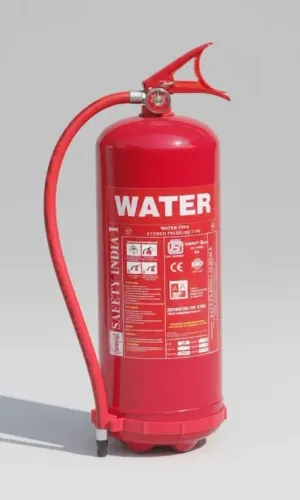
| Loose cell, phone, power bank, or laptop | A water-based agent gives the strongest cooling; an encapsulating agent is useful only when its test data shows cooling and re-ignition control. | Choose a portable lithium-ion extinguisher with a directed discharge, adequate capacity, and a stated post-discharge observation period. |
| Swollen or venting pack | An aerosol agent can knock down flames but can leave cells hot enough to reignite. | Use it only when the manufacturer documents battery-specific performance; keep distance and avoid touching the pack. |
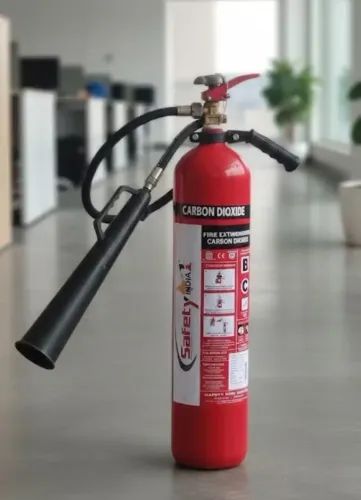
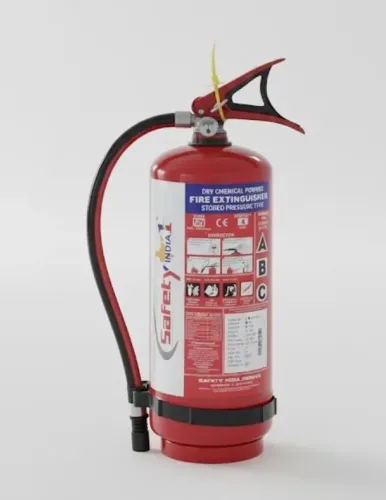
| E-bike battery, EV pack, cabinet, or ESS | Dry chemical, carbon dioxide, and clean agents can suppress external flame without cooling the cell mass. Water remains the principal cooling option for larger incidents. | Treat a small extinguisher as initial flame control, not a substitute for emergency services and sustained cooling. |
| Damaged, exposed, or electrically energised pack | Do not select a Class D unit merely because the battery contains “lithium”; Class D addresses combustible lithium metal, not ordinary lithium-ion cells. | Confirm electrical-use instructions, discharge range, and terminal-clearance requirements before purchase. |
Ask Safety India Service 27CNOPP6823R1ZV for agent test results covering the battery size and failure mode you identified, not a product label alone. For storage systems, keep UL 9540A propagation data separate from portable-extinguisher listing and agent-performance evidence. After discharge, isolate the pack and monitor it for renewed heat, smoke, or venting.
Related product
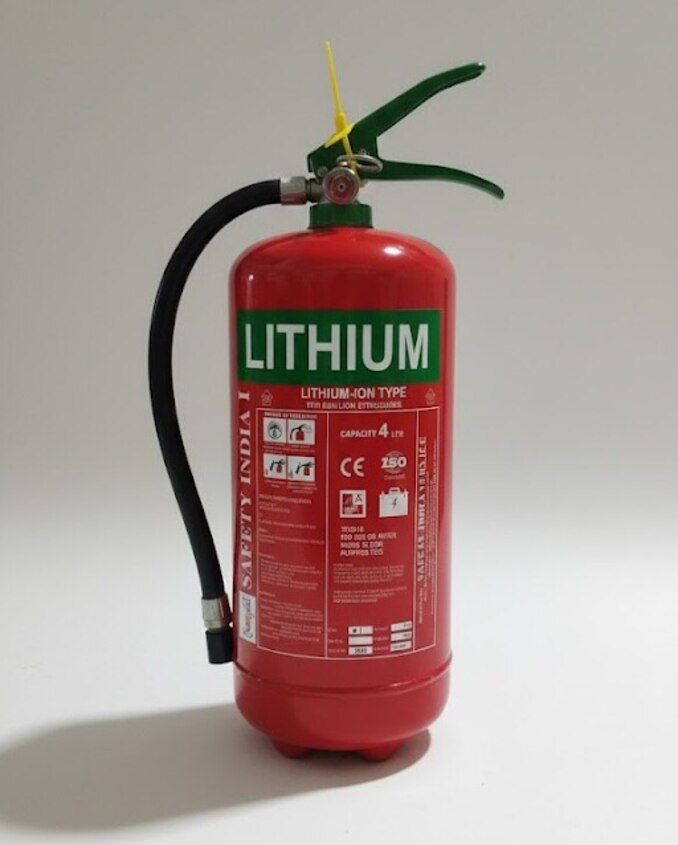
 | Lithium-ion Fire Extinguishers Lithium-ion Fire Extinguishers Protect your home, office, and industrial spaces from modern battery fires with our advanced Lithium-Ion Fire Extinguishers. View product → |
Demand Test Evidence, Not Just a Lithium-ion Label
Ask for a test report covering the battery configuration you need to protect, not a brochure showing flames disappearing. The report should identify the battery chemistry, pack voltage, watt-hours, state of charge, enclosure, cell or module arrangement, agent quantity, discharge method, and distance from the battery.
Require these documents before approving the extinguisher:
- An independent test report naming the exact extinguisher model, agent formulation, discharge duration, and battery configuration tested.
- Results showing flame knockdown, temperature reduction, hold time, and re-ignition testing after discharge. A battery that reignites minutes later has not been controlled.
- A listing or certification document stating the extinguisher’s scope and limitations. Confirm that the listing covers the intended equipment, rather than only ordinary electrical or Class A fires.
- Test evidence for the actual application: a phone cell does not represent an e-bike pack, an electric-vehicle battery, a battery cabinet, or a grid-storage module.
- Instructions specifying separation distance, operator position, repeat applications, ventilation, post-fire monitoring, and disposal or isolation of the damaged pack.
Treat UL 9540A correctly. It characterizes thermal-runaway fire propagation in energy-storage systems; it does not certify a portable extinguisher as effective against lithium-ion battery fires. Keep that evidence separate from extinguisher listing and agent-performance records.
Also reject claims based only on dry chemical, carbon dioxide, or clean-agent flame suppression when the report provides no cooling or re-ignition data.
Build the Site Plan Around Detection, Access, and Recovery
Place extinguishers where a person can reach them without crossing smoke or approaching a blocked battery. Measure travel distance from each charging position, storage area, and battery-work bench; the underlying hazard still controls the limit—OSHA uses 75 feet for Class A and 50 feet for Class B protection where those classes apply.
Do not treat a “lithium-ion” label as permission to ignore required Class A, B, or C coverage.
- Provide charging room fire protection with smoke or heat detection, clear exits, ventilation, and separation from ordinary storage. Detection must raise the alarm; it does not make an unattended battery safe.
- Mount units on visible brackets or cabinets, keep the path clear, and follow the adopted code for mounting height. A common NFPA 10 arrangement places the extinguisher handle no higher than 5 feet when the unit weighs 40 pounds or less, and no higher than 3.5 feet when it weighs more.
- Inspect the pressure indicator, pin, seal, hose, nozzle, cabinet, and access every month. Record annual servicing, recharge or replacement after any discharge, and removal of corrosion or impact-damaged units.
- Mark an isolation area for failed batteries and keep metal containers, cooling equipment, and emergency contact details available only under a written procedure.
Flame knockdown is not recovery. A damaged pack can retain heat and release flammable or toxic gases, so evacuate and call emergency services when smoke, venting, rapid heating, or a large pack is involved. After discharge, prevent handling and transport until trained responders establish cooling and post-fire battery monitoring; re-ignition can occur hours later.
Frequently asked questions
Why does a lithium-ion battery fire remain dangerous after the flame disappears?
Thermal runaway can continue inside the cells, causing heat, venting, cell-to-cell propagation, and re-ignition after visible flames are gone.
What should you do before discharging a lithium-ion fire extinguisher?
Follow a safe response sequence that considers detection, access, evacuation, electrical hazards, battery condition, and the possibility of re-ignition before discharge.
How do you match an extinguisher to a lithium-ion battery fire?
Assess the battery chemistry, pack or cell configuration, equipment involved, and failure mode instead of choosing only from a lithium-ion label.
What evidence should you request from an extinguisher supplier?
Request test evidence showing the extinguisher's performance against relevant battery fire conditions, including flame knockdown and re-ignition control.